

Snake bite is a common concern for pet parents in Australia, especially when living or travelling in rural or remote locations.
What is a snake bite?
Venomous snakes in Australia cause envenomation by biting and injecting venom into the wound. This venom sits in the tissues and tissue fluid (lymph) at the bite site, which then moves towards the heart and bloodstream when muscles move the limb. Once in the bloodstream, venom quickly travels to all parts of the body. Venom from different snakes cause different problems in the body, but generally it affects the blood (causing bleeding), the nerves (causing paralysis and difficulty breathing) and the muscles (causing painful muscle damage), with toxins from the muscle damage then causing secondary kidney damage. The role of antivenom in treating snake envenomation is to bind to venom that is present in the bloodstream, and then be flushed out, before it can bind to and damage organs.
Interestingly, not all snake bites result in envenomation. Venomous snakes make up 65% of the approximately 220 snake species in Australia, with pythons and tree snakes making up the non-venomous portion. Even venomous snakes can give a ‘dry bite’, which is when a snake bites without injecting venom, usually as a first warning strike to say ‘go away’. But, for the best outcome, all snake bites should be treated as an envenomation until proven otherwise.
How is a snake bite treated in dogs and cats?
The aim of a snake bite bandage in human cases (people are usually bitten on the leg or arm) is to compress and immobilise the limb, to stop muscle movement and slow lymph flow in the affected limb. This slows the release of the venom into the bloodstream and body, allowing the body time to detoxify and remove the venom.
In pets, we need to treat snake bites differently because we can’t simply ask where they were bitten, or tell our dog or cat to sit still and not move the bite site. To complicate this, snake bites tend to occur on the face and neck in dogs (because dogs investigate things by sticking their noses in or mouthing it), or on the face or front legs in cats (because cats like to ‘play’ with new things). In addition, our pets have fur, which vastly reduces our ability to see a bite mark and know where the bite occurred. All of these factors make application of a compression bandage to a bite site very difficult or impossible, meaning that immediate veterinary treatment, including antivenom, is a pivotal aspect of treating snake envenomation in pets.
Of course, there may be less common incidents where you may see a snake bite your pet’s leg or your pet may be limping after a suspected snake interaction, so a limb can be assumed to be the bite site and a compression/immobilisation bandage and/or splint applied. If this occurs, and you don’t have a snake bite bandage, then a stick can be used as a splint and a cohesive bandage applied to hold it in place. If you do have a snake bite bandage, then follow the same instructions on it as you would for a human.
Snake bites are an emergency. Seek veterinary advice and get your pet to the closest veterinary hospital as soon as it is safe to do so – remember to call ahead as not all veterinary clinics stock antivenom.
Do I need a snake bite bandage in my pet first aid kit?
When packing a pet first aid kit, you can add a snake bite bandage. But, when you take the above information into consideration, it’s cheaper and more practical to carry one in your human first aid kit and use it for your pet if the situation happens to be appropriate.
Remember, the most important part of snake bite treatment in dogs and cats is getting to a veterinary hospital as soon as it is safe to do so.
Has my dog or cat been bitten by a snake?
Overall, if you suspect an interaction between your pet and a snake, then keep them quiet and carry them, if possible, to reduce movement. Always seek veterinary advice immediately. Don’t wait for symptoms or waste time trying to locate a bite mark! The sooner that an envenomation can be diagnosed and treated then the better (and cheaper!) the outcome.
Signs of snake bite and envenomation in dogs and cats:
- collapse followed by apparent recovery
- lethargy
- weakness or wobbly walking
- muscle tremors or shaking
- dilated pupils or reduced blinking (cats may hide from bright light)
- paralysis
- inability to control bladder or bowels
- unusual bleeding from the nose or mouth
- dark or bloody urine
Are snakes angry or just misunderstood?
Avoiding snakes means understanding normal snake behaviour:
- Snakes aren’t scary or aggressive, they will only act defensively to strike or bite if they feel threatened and will prefer to escape or hide than interact with you or your pet.
- Snakes tend to be more active in warmer weather, but some species are adapted to cooler weather in temperate areas. Likewise, in very hot weather or hot locations, snakes have adapted to hide during the hottest parts of the day, preferring to be active at dawn and dusk or even during the night.
- Snakes are attracted to food, this might mean small reptiles, frogs or toads (ie. near water), small mammals like rodents (which are attracted to seed or grain around pet bird cages or chicken coops, rubbish and food scraps).
- Snakes can have super-powers. Did you know that the non-venomous Keelback is the only native Australian snake (and one of very few Australian species) capable of eating the toxic cane toad without dying?!
How can I prevent my dog or cat from being bitten by a snake?
Snake bite prevention in pets includes:
- Teach your dog good recall and a command like “leave it”, along with alerting you to something new rather than interacting. This life skill can help in many different situations. Seek help from your vet or a dog trainer if you need tips.
- Snake aversion training isn’t necessary and has mixed efficacy, but if you want to enrol then ensure the provider offers positive reinforcement rather than punishment-based methods (avoid tools like shocks, sprays or collars).
- Always check your campsite when setting up and keep your pet secure at all times. Don’t allow pets to roam unsupervised – this also applies to safety regarding baits, scavenging, other dogs and wildlife.
- Remove or avoid areas where snakes might like to hide or seek warmth in your campsite
- Wood piles or leaf litter
- Long grass or shrubs
- Camping equipment, dog bedding or bags on the ground
- Dispose of food waste appropriately into bins so it doesn’t attract wildlife or rodents, which, in turn, attracts snakes
- If you see a snake:
- Keep your pet secure and close to you
- Slowly step away from the snake, allowing it space to assess an exit route
- If you suspect that your dog or cat has interacted with a snake:
- Don’t wait for possible symptoms of a bite, seek veterinary advice immediately, as the sooner that snake envenomation is treated, the better the outcome
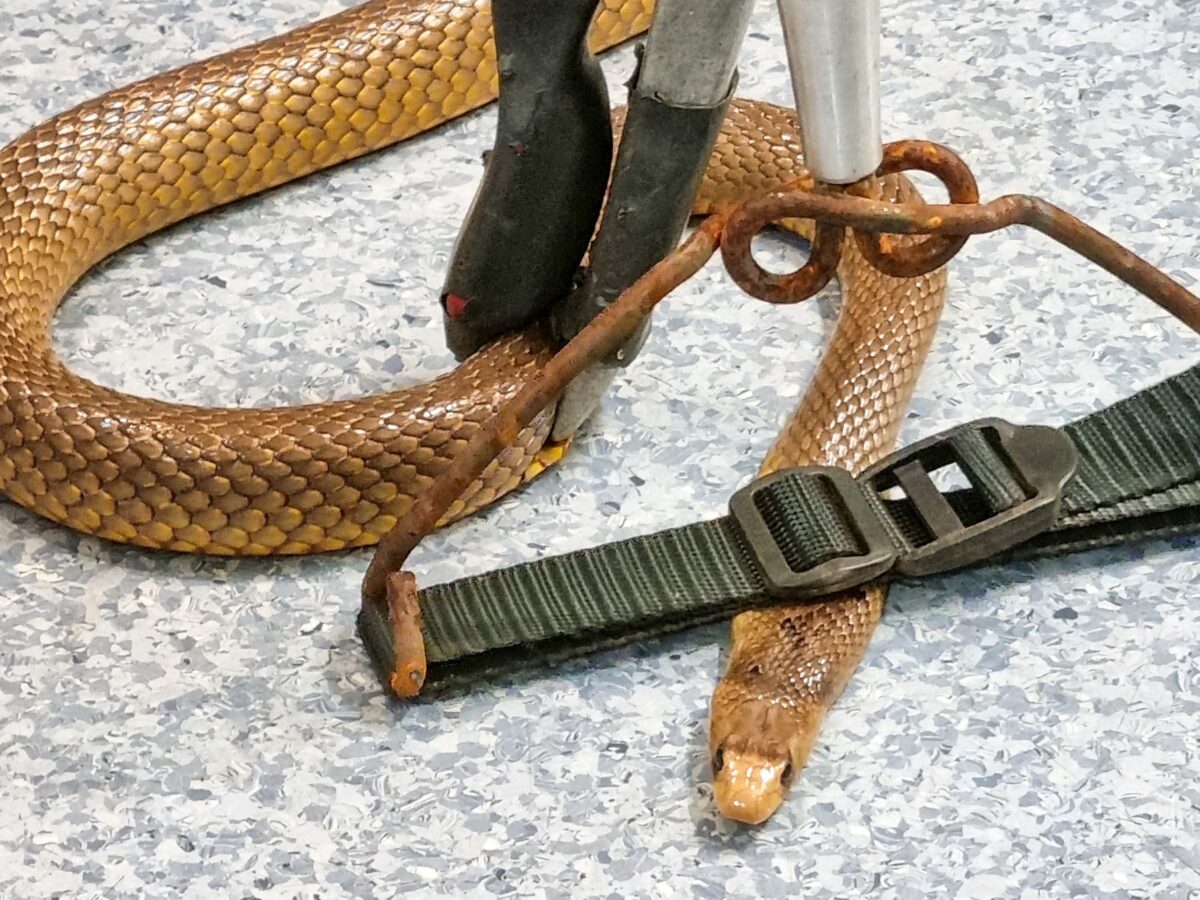
- Call a snake catcher to remove the snake and transport it to a veterinarian if it is injured but alive
- Do not attempt to catch or handle a snake yourself, envenomation can still occur from a dead snake
- Always assume a snake is venomous until proven otherwise
- Take a photo to assist snake identification, if it is safe to do so (the zoom function on your phone camera can be handy here)
Be prepared for emergencies when out and about with your pet with the Vet in a Van x Navigator Pet First Aid Kit – the included Pet First Aid Quick Reference Guide provides easy instructions for managing situations like snake bite.